 by
by It can be hard to negotiate a package, but knowing how to counter an offer on salary can make a big difference in your career.
Whether you're getting a new job or asking for a raise, it's important to be confident and ready for the conversation.
In this article, we'll talk about useful tips for writing a counter offer like a pro and getting the pay you deserve.
When to counter a salary offer?
It's normal to be unsure about when to start this conversation, but understanding when to say no can help you feel more confident. This can make it much more likely that you will be successful.
New job offer
If you've gotten an initial proposal but think the pay doesn't match your skills, experience, or the market rate, a salary counter offer is most likely. In this case, it's very important to wait until you have the official document in writing.
Internal promotions
If you're offered a raise within the company, you need to ensure that the salary for the new role matches the extra work you'll have to do.
When people get promoted, they usually get small bumps instead of big ones. This is because the new level may not be reflected.
Annual reviews
Annual performance reviews are also a good time to make a salary counter offer. If you've done well at work, now is the time to use your accomplishments as a reason to ask for a higher salary or more benefits.
It's a great moment to talk about this topic because employers often plan for them during this time.
After probation period
If your contract includes a probation time, it's okay to start talking about your salary after it is up.
If you've met or exceeded expectations, the review is a great moment to ask for more money.
Signs that it’s time to counter offer:
- You've looked into the market, and the proposal is lower than what is normal.
- The first version doesn't take into account how much experience and skill you have.
- Another company has made you a better offer with better pay.
- The duties are more important than what was first said.
By recognizing these opportune moments, you can confidently begin the process of countering a job offer.
Preparation to counter offer salary
Begin by gathering data on the salary range for your role.
Resources like Glassdoor, Payscale, and LinkedIn Salary Insights can help you establish a reasonable range based on current trends.
Be specific about factors that influence the pay, such as company size, geographic location, and industry.
Next, think about your unique abilities, high income skills and qualifications to see how much you are worth. Keep track of your achievements, certifications, and special competencies that could make you stand out from other candidates or coworkers.
The goal is to show that you deserve a higher salary based on your skills and not just the state of the job market.
Compile evidence that supports your value to the company.
This could include:
- Quantifiable accomplishments, such as sales figures, successful project completions, or efficiency improvements.
- Awards or recognitions that showcase your contributions.
- Testimonials or references from colleagues, supervisors, or clients.
- Certifications or advanced degrees that enhance your qualifications.
Before entering negotiations, decide on your target. Your job counter offer should aim for the higher end of the range but remain within reason.
For example, if market research shows your role’s salary typically ranges from $70,000 to $90,000, a counter offer at $85,000 may be more effective than pushing for the extreme high end without adequate justification.
How to counter offer salary?
Now that you’ve prepared your strategy, it’s time to implement it. Here’s a step-by-step guide on how to counter offer a job offer effectively.
Start with gratitude and enthusiasm
Always begin the conversation by thanking the employer for the offer. Show enthusiasm for the role and the company. For instance:
"Thanks a lot for giving me the job. I'm really looking forward to working with the team and helping the company grow."
Show your research
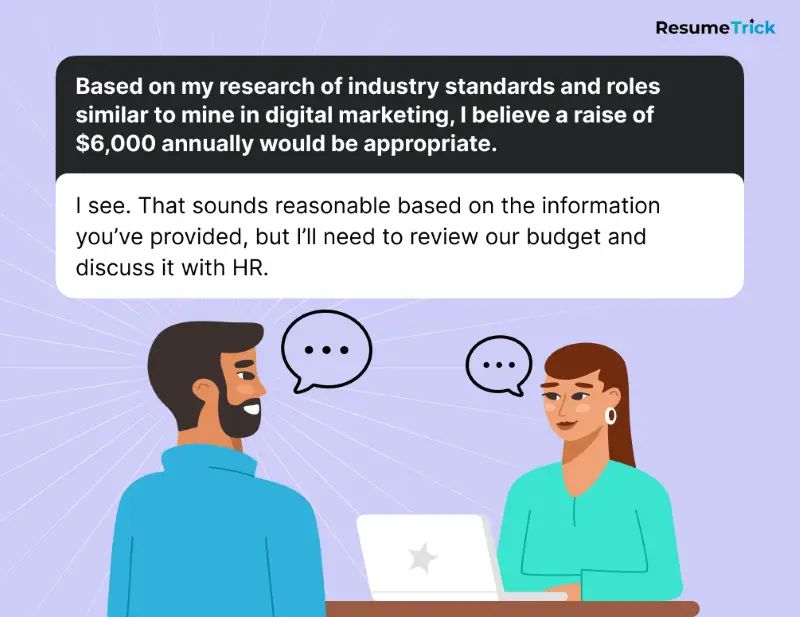
Next, transition into the counter offer by presenting your reasoning. Keep your tone positive and constructive.
"I would like to talk about the salary after looking over the offer and doing some research on what similar jobs in our industry and location pay. Based on my years of experience and past successes, I think a salary of $70,000 would be more appropriate."
Remain open to negotiation
After stating your salary counter offer, express your willingness to discuss options.
"I'd like to talk more about this and see how we can come up with a solution that works for both of us."
Focus on value
Emphasize the value you will bring to the organization. Highlight specific contributions you plan to make:
"I boosted product sales by 19% in my last job, and I think I can do the same here."
Stay professional and polite
Maintain professionalism throughout the discussion, even if the employer doesn’t immediately agree with your request. Avoid aggressive language, and keep the tone collaborative.
"I completely understand that you have a limited budget, and I'm happy to work with you to find the right balance."
By approaching the counter offer for job with positivity and a well-reasoned argument, you increase the chances of reaching an agreement that works for both parties.
Tips for successful salary negotiations
Navigating salary negotiations can be challenging, but with the right mindset and tactics, you can maximize your success. Here are some practical tips to guide you through the process:
1. Be clear
It’s important to communicate your expectations clearly. State your desired salary or range confidently but be prepared to justify it with data and achievements.
Ensure that your range is based on thorough market research to demonstrate that your ask is reasonable.
Based on my research and the pay level for this job in our area, I would like to make between $85,000 and $95,000. I raised sales by 20% in my last job, which brought in a lot of money for the company.
2. Consider the full package
Salary is just one aspect of compensation.
Take into account other benefits such as:
- Health insurance. Employer-sponsored insurance can save you thousands of dollars annually in premiums, out-of-pocket costs, and potential tax benefits.
- Retirement contributions (401k match). This is money that grows tax-deferred and can help you build wealth without you contributing beyond your own portion.
- Bonuses or commissions. For roles where variable pay is a significant component, such as sales or business development, these can sometimes outpace base salary.
- Stock options or equity. While not guaranteed, if the company performs well, they can far exceed a traditional salary increase in value over time.
- Paid time off or vacation days. PTO means more days you are paid without working, increasing the effective rate of pay per day worked.
- Flexible arrangements. Remote work or flexible hours, can reduce commuting or relocation costs.
You may be able to negotiate these non-salary benefits to increase the overall value of your compensation package.
Is it possible to talk about getting more paid time off as part of the deal?
3. Practice negotiating
If you’re new to this process, try with a friend, mentor, or even in front of a mirror. Role-playing different scenarios can help you anticipate challenges and refine your approach.
Practicing will help you stay calm and articulate during the actual conversation.
Thanks for the offer. Based on my experience and what the market is paying, I was hoping for something closer to $90,000. Is it possible to go back and change the number?
4. Be prepared for a pushback
Employers may push back on your salary counter offer, which is why it’s essential to be ready for different responses.
I get it. If that's the case, can we talk about other bonuses, chances to learn new skills, or a pay raise sooner?
5. Remain confident
Confidence is key to successful negotiations, but it’s essential to strike the right balance between assertiveness and professionalism.
Avoid ultimatums or aggressive tactics that could damage the relationship with your employer. A calm, confident tone will help you come across as credible and reasonable.
Thank you for the offer. I'm excited about the job. I think the salary we talked about is fair for my skills and contributions, and I'm happy to work with you to find a solution that works for both of us.
These tips will help you navigate the negotiation process more effectively and increase your likelihood of success.
How to handle rejection of your counter offer?
Not all negotiations will go your way, and it’s possible that your salary counter offer may be rejected. However, how you handle this situation can make a significant difference in your relationship with the employer and your future chances.
Stay composed
Avoid expressing frustration or disappointment. Instead, express appreciation for the opportunity to discuss your compensation. You might say:
"Thank you for thinking about my request. I know that the offer is final, and I'm still excited about the chance to help the team."
Ask for feedback
Politely ask why the salary counter offer was declined. This can help you gain insight into the company’s reasoning and potentially open the door for future negotiations.
"Can you give me any information about the choice? I'd like to know what factors are at play."
Explore other benefits
If the salary itself is non-negotiable, explore other areas where you might ask for more. This could include a signing bonus, additional vacation days, or a performance review with the possibility of a raise in six months.
Decide whether to accept the offer
If the salary offer remains below your expectations, you’ll need to decide whether to accept the position. Consider the overall package, culture, growth opportunities, and whether the role aligns with your long-term career goals.
If the offer is significantly below what you believe is fair, it may be worth considering other options.
Stay open to future opportunities
If you decide to decline the offer, maintain a positive relationship with the employer. You never know when future opportunities may arise with the same organization. Thank them for the chance and express interest in staying in touch.
"Thank you for the offer, but I've decided to look for other chances right now. I hope we can meet again in the future."
Conclusion
Countering a salary job offer, you need to know your worth and make a strong case with evidence and confidence.
Being able to negotiate well is a valuable skill that can help you reach your professional development goals, whether you get what you want or find a compromise. Keep in mind that the right approach can turn a good proposal into a great chance.
Create your professional Resume in 10 minutes for FREE
Build My Resume