 by
by Creating a Canadian resume that fits the standards is crucial when applying for jobs in this country.
Maybe you’re a newcomer, or you’ve lived here for years and want to freshen up your paper. Either way, knowing what Canadian recruiters actually want to see gives you a real edge.
In this article, I’ll walk you through the must-have parts of a Canadian resume format, plus offer you some smart tips on how to lay everything out so you catch an HR’s eye. Let’s get into it.
Understanding the Canadian resume format
The Canadian job market places a premium on clarity, relevance, and professionalism, and your resume should reflect those values.
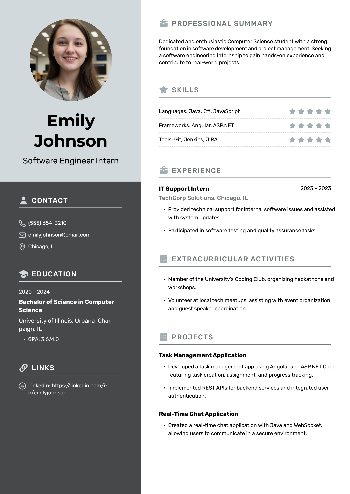
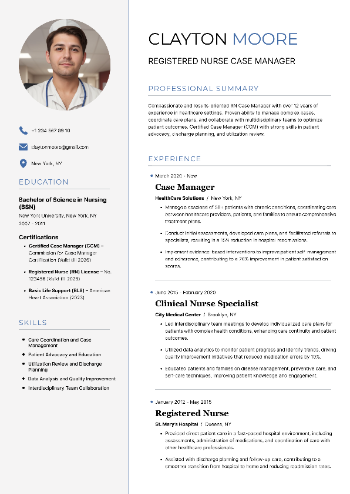
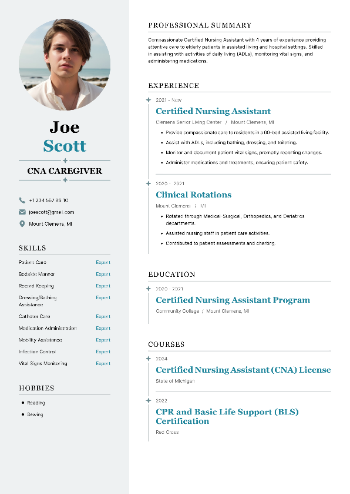
Forget about adding your photo, age, or whether you’re married. Canadian resumes stick to the essentials - your skills, experience, and what you’ve achieved.
Usually, it runs one to two pages - short enough for someone to skim and pick out the good stuff fast.
You’ll want to tweak your doc for every single position you apply to. Pull keywords straight from the posting if you can. This way, your CV gets picked up by ATS.
- What is ATS?
- It stands for Applicant Tracking System. Basically, it’s the software companies use to organize and filter the mountain of papers they get. If your material isn’t ATS-friendly, it might never reach a real person.
Keep tone of a Canadian resume format formal. Get to the point, utilize tight language, and focus on what you’ve got. Canadian employers love numbers and results, so show them what you’ve done - like “Increased sales by 25%” or “Managed a team of 10.” Quantify your wins and achievements whenever possible. That’s what gets noticed.
Create your professional Resume in 10 minutes for FREE
Build My Resume
Key elements of a Canadian resume
If you’re putting together an application, a few resume sections really matter. Each one tells bosses something important about who you are and what you bring to the table. Here’s how Canadian format for resume breaks down.
Contact information
At the top of your Canadian resume, you should list your full name, phone number, email address, and LinkedIn profile.
Skip the personal stuff. Don’t add your photo, age, gender, nationality, or marital status. Recruiters don’t expect or want that.
Don't forget about:
- Full name. Make sure to write your first and last name, like on your official documents. If you go by a nickname, feel free to add it in brackets - something like Jonathan “Jon” Smith.
- Phone number. Verify you give a number that works and that you actually answer. Moving to Canada? Double-check you’ve got a local area code.
- Email address. Keep it professional. The best bet: your name, something like firstname.lastname@gmail.com.
- LinkedIn. Mentioning your profile is optional but highly recommended. Ensure your account is up to date and matches the information on your Canadian resume format.
- Availability. Let them know when you’re ready for interviews or to start at this position. This simplifies the process for everyone.
Professional summary or objective
Right after your contact details, jump into a quick professional opening statement. Keep it short - two or three sentences that show off your experience, skills, and what you bring to the table. Think of it as your chance to grab the employer’s attention right from the start.
| Feature | Summary | Objective |
|---|---|---|
| Purpose | Gives a snapshot of your skills, experience, and what makes you qualified | Spells out your career and what you want to achieve |
| Length | Typically 2-4 sentences or 3-5 bullet points | Usually 1-2 sentences |
| Focus | Shines a light on your background that matter for the job | Emphasizes work goals |
| Tone | Results-oriented | More personal, a bit aspirational |
| Content | Lists your top accomplishments, skills, and relevant history | Talks about the kind of role you’re after and where you want your path to go |
| Relevance | Custom-fit, showing how you meet what the supervisor needs | More general, not always a perfect match |
| Audience Impact | Engages the manager by demonstrating value and fit for the position | Lets the employer know what you’re hoping for, but can be vague |
| Common Usage | Preferred in most Canadian industries; effective for seasoned candidates | More popular with entry-level applicants, students or people switching fields |
| Example | "Results-driven marketing professional with over 5 years of experience in digital marketing, skilled in SEO and content strategy." | "Seeking a challenging position in digital marketing to utilize my skills and contribute to a dynamic team." |
Skills for Canadian resume
This is where you get to reveal what you’re actually good at.
Don’t list random abilities or skills - pick the ones the board mentions, and utilize the exact words when you can. That’s what catches a hiring manager’s eye.
Stick to bullet points. It’s way easier to read, and honestly, no one wants to dig through a wall of text. If you have a ton of competencies, break them into categories. And don’t forget to mix in both technical know-how and those people qualities - employers want to see you’re well-rounded.
Hard skills are all about what you can do - stuff you learned in school, training, or on the job. Think about things that are plain to measure or prove.
Examples of hard skills for Canadian resume format
1. Technical skills:
- Programming Languages: You know your way around Python, Java, or C++.
- Data Analysis: Comfortable working with Excel, SQL, or R to crunch numbers and spot trends.
- Software Proficiency: You can handle Adobe Creative Suite, AutoCAD, or Microsoft Office without breaking a sweat.
- Cloud Platforms: Experience with AWS, Azure, or Google Cloud for running and managing apps.
2. Certifications:
- Project Management Professional (PMP): Shows you get project management inside and out.
- Certified Public Accountant (CPA): Proof you’re a pro with numbers and accounting.
- First Aid/CPR Certification: Trained and ready to handle emergencies.
- Certified Scrum Master (CSM): You understand agile and scrum practices like the back of your hand.
3. Languages:
- Fluent in languages like Spanish, Mandarin, or French.
- Can read and translate technical documents in Japanese.
4. Mathematical skills:
- Strong background in statistics, calculus, or financial modeling.
- Good at interpreting data using probability and regression analysis.
Soft skills are a bit different. These are the personality traits that help you work well with others. They’re harder to quantify, but just as important.
Examples of soft skills for Canadian resume
1. Communication:
- Explaining your ideas clearly, whether you’re talking or writing.
2. Teamwork:
- The competence to work collaboratively with others to achieve common goals.
3. Problem-solving:
- Looking at tricky situations, thinking them through, and coming up with smart solutions.
4. Adaptability:
- Rolling with the punches and facing new challenges without losing your cool.
5. Leadership:
- Inspiring and guiding a team, handling conflicts, and making decisions that move things forward.
6. Time management:
- Figuring out what matters most and organizing your time so you meet your deadlines.
Key Differences
| Aspect | Hard Skills | Soft Skills |
|---|---|---|
| Nature | Technical, task-specific | Social, people-centered |
| Measurability | Easy - often backed up by numbers or certificates | Tougher - more about how you interact |
| Learning Method | Acquired through education, training | Picked up from real life |
| Examples | Coding, data analysis, certifications | Communication, teamwork, problem-solving |
Both hard and soft ones to succeed at position. Hard skills demonstrate your technical proficiency such as computer skills and knowledge, while soft skills highlight your ability to work effectively with others and adapt to changing environments.
A well-rounded professional will possess a balance of both sets, which can be tailored to specific roles and industries.
Work experience
Your work experience section of the Canadian resume should list your previous employment history in reverse chronological order, starting with your most recent job.
- Make sure your job title fits what you did.
- Write out the company’s full name and where it’s located (city and province).
- Don’t forget the month and year you started and finished each job.
- Utilize bullet points to lay out your responsibilities and accomplishments in each role.
- Tweak each description so it emphasizes skills relevant to the target position.
Use action verbs (e.g., managed, developed, improved). Whenever you can, add numbers or results so people see the real impact you made.
Canadian resume education
In this part, list your relevant academic qualifications, beginning with your highest diploma.
- Spell out your degree, like Bachelor of Science in Computer Science.
- Name the school, along with the city and province (or country if it’s outside Canada).
- Add the month and year you graduated.
- If you earned any honors or special distinctions, mention those too.
If you studied outside Canada, it helps to display how your knowledge matches up with standards. Include any extra certifications or training you took to bridge the gap. That way, employers see right away that your qualifications fit.
Optional sections of Canadian resume
Depending on the job and your story, you might want to add:
- Volunteering. Write relevant community roles that tie in with the opening you want. If you picked up useful skills there, mention them.
- Languages. Speak more than one language? Especially English or French (Canada’s two official languages)? Jot those down here.
- Awards and honors. Brag a little. If you’ve got recognitions - like “Employee of the Year” or academic distinctions such as summa cum laude - this is the spot for them.
Create your professional Resume in 10 minutes for FREE
Build My ResumeCommon mistakes to avoid
Even with a sharp modern resume template, it’s easy to fall into some classic traps. Dodge these errors, and you’ll have a much better shot at landing a job in Canada.
Irrelevant personal information
Some folks are used to incorporating things like age, gender, or even a photo. Don’t do that here. In Canada, employers don’t require this stuff, and it could lead to proximity bias. Stick with your professional contact details.
Generic resume
Sending out the same old documents to every executive? That's a fast way to get ignored. Recruiters expect you to tweak your paper for each place.
Grab those keywords from the job posting and rework your summary, skills, and experience so they actually match the job you want.
Overloading
Don’t write a novel. Keep your Canadian resume format short and focused - ideally a 1 page resume. Anything longer than two sheets starts to feel overwhelming and, honestly, bosses won’t read it all.
Failing to proofread
Small mistakes matter. Even a simple typo can leave a bad impression. Read your document out loud, double-check everything, and if you can, get a friend or mentor to look it over too. An error-free resume shows you care and that you’re serious.
Canadian resume format samples
Canadian marketing resume example
Emma Taylor
Toronto, ON | emma.taylor@gmail.com | (416) 555-1234 | linkedin.com/in/emmataylor
Professional Summary
Driven digital marketer with 10+ years shaping brand voices, building content strategies, and running social media that actually connects. I’m all about using data to tell stories and boost engagement — think higher brand awareness, more loyal customers, and campaigns that make a difference. Now, I’m ready to bring that energy and expertise to help Brightwave Digital grow.
Skills
- Digital Marketing Strategy
- Social Media Management (Facebook, Instagram, LinkedIn)
- SEO/SEM
- Google Analytics & AdWords
- Content Creation & Management
- Data Analysis (Excel, Tableau)
- Email Marketing (Mailchimp)
Work Experience
Marketing Manager
Hootsuite, Toronto, ON
June 2020 – Present
- Lead a team of 8 and ramped up social engagement by 30% in my first year.
- Rolled out a digital rebrand that drove web traffic up 25% and pushed conversions up by 15%.
- Built and launched SEO strategies that bumped up organic search, bringing 20% more visitors to our site.
Digital Marketing Coordinator
Shopify, Toronto, ON
March 2016 – May 2020
- Put together and ran email campaigns with an average open rate of 22%.
- Managed blog, newsletter, and social media content — saw engagement jump 40% in two years.
- Dug into market research and data to spot new customer segments and fresh growth opportunities.
Education
Bachelor of Business Administration (Marketing)
University of Toronto, ON
Graduated: April 2015
Certifications
- Google Analytics Certification, 2020
- HubSpot Content Marketing Certification, 2019
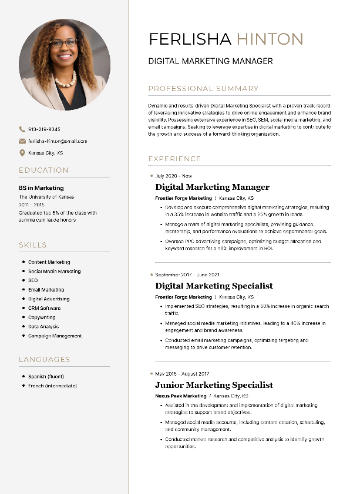
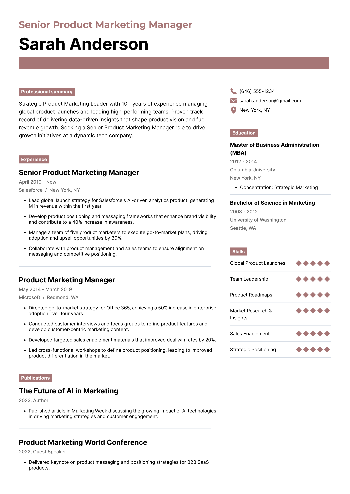
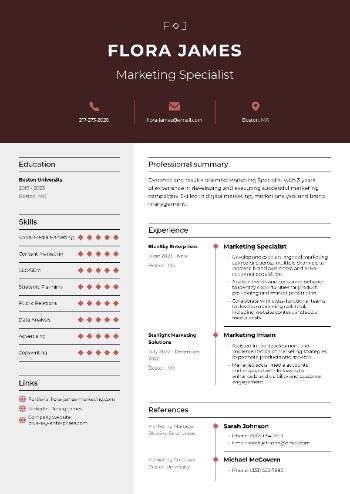
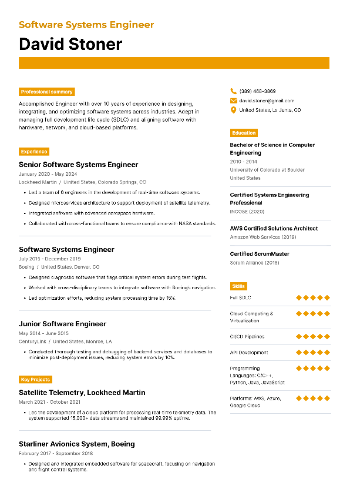
Canadian resume template for engineering
Michael Johnson
Vancouver, BC | michael.johnson@gmail.com | (604) 555-5678 | linkedin.com/in/mjohnson
Professional Summary
Detail-oriented Mechanical Engineer who’s spent over 10 years getting my hands dirty designing and fine-tuning industrial machines. I know my way around CAD, love materials testing, and thrive on product development. I’m excited to bring my background — and some fresh ideas — to Tesla Motors and jump into projects that push the limits of engineering.
Skills
- 3D CAD Design (SolidWorks, AutoCAD)
- Mechanical Testing & Analysis
- Project Management
- Product Development
- Prototyping & Manufacturing
- Finite Element Analysis (FEA)
- Lean Manufacturing
Work Experience
Mechanical Engineer
Ballard Power Systems, Vancouver, BC
July 2019 – Present
- Design and and build mechanical parts for fuel cell systems — boosted efficiency by 15% so far.
- Conduct stress and FEA tests to make sure every design holds up in the real world.
- Lead a cross-functional team in the development of a new prototype that reduced production time by 20%.
Junior Mechanical Engineer
Seaspan Shipyards, Vancouver, BC
September 2016 – June 2019
- Helped design mechanical systems and components for ships and marine equipment.
- Ran material testing and analysis to keep everything safe and up to standard.
- Worked with manufacturing to streamline production — cut waste by 10% along the way.
Education
Bachelor of Engineering (Mechanical Engineering)
University of British Columbia, Vancouver, BC
Graduated: June 2016
Certifications
- Professional Engineer (P.Eng.), Engineers and Geoscientists BC, 2020
- Lean Six Sigma Green Belt, 2019
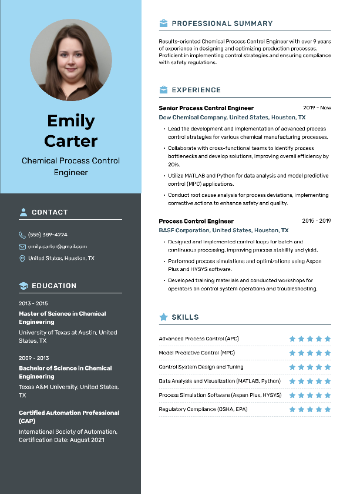
Healthcare resume templates for Canada
Sarah Williams
Montreal, QC | sarah.williams@gmail.com | (514) 555-8765 | linkedin.com/in/sarahwilliams
Professional Summary
Caring and sharp-eyed Registered Nurse with more than 12 years on the front lines of hospital care. I’ve got a knack for handling the chaos of acute care, walking patients and families through tough moments, and making sure every detail gets the attention it deserves. From administering medications to patient education, I’m all in when it comes to better care and better outcomes.
Work Experience
Registered Nurse (Acute Care)
Montreal General Hospital, QC
April 2018 – Present
- Take care of patients in a busy 20-bed unit, making sure their recovery stays on track.
- Give medications, run diagnostic tests, and handle wound care — always focused on safety and comfort.
- Walk patients and their families through what comes next after discharge, so they stick with their treatment plans.
Registered Nurse (Emergency Department)
Jewish General Hospital, Montreal, QC
June 2014 – March 2018
- Handled emergencies for seriously ill or injured patients in a high-stress setting.
- Worked side by side with doctors and the healthcare team to stabilize patients and deliver life-saving care.
- Showed new nurses the ropes — everything from emergency protocols to the little things that make a difference for patients.
Skills
- Patient Care & Assessment
- Acute Care Nursing
- Medication Administration
- Patient Education & Advocacy
- Electronic Medical Records (EMR) Management
- Wound Care & Treatment
- CPR & First Aid (BLS, ACLS Certified)
Education
Bachelor of Science in Nursing (BSN)
McGill University, Montreal, QC
Graduated: May 2014
Certifications
- Basic Life Support (BLS), 2023
- Advanced Cardiovascular Life Support (ACLS), 2022
- CPR & First Aid, 2022
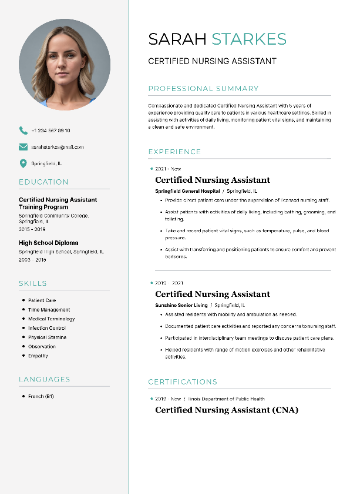
Canadian resume format examples
FAQ
- Is a cover letter necessary in Canada?
- Yes, it's highly recommended to include a cover letter, unless the job posting specifically says not to.
- Should I list references on my resume?
- No, references are typically not listed on the application. Instead, add a note saying "References available upon request."
- What is the ideal font for a Canadian resume?
- Use professional fonts like Arial, Calibri, or Times New Roman in a size between 10 and 12 points for readability.
- What should I do if I have employment gaps?
- Be honest and briefly explain them in your cover letter or interview, focusing on any skills or experiences gained during that time.
Conclusion
Using a Canadian resume format that adheres to content expectations is a significant step towards securing employment.
By centering on clarity, conciseness, and relevance, and by highlighting your skills and achievements, you can create a document that stands out in the competitive job market.
Remember, tailoring your Canadian resume to each job application will further improve your chances of success. With these tips in mind, you'll be well-prepared to make a strong impression on Canadian HR.
Create your professional Resume in 10 minutes for FREE
Build My Resume